The heavy lifting of hosting often happens long before the first guest arrives. For many in the Dallas–Fort Worth area, the desire to gather around a meaningful meal is frequently at odds with the logistical reality of a busy household. When the person orchestrating the evening is also one of the primary diners, the risk is that the host becomes a silent figure, drifting between the stove and the sink while the conversation flourishes elsewhere.
Defining the Culinary Direction
A successful shared meal begins with a clear sense of direction. Rather than leaving the menu entirely open to interpretation, which can lead to a cluttered table of competing flavors, consider selecting a central theme. This provides a framework for guests while maintaining your control over the evening's flow. When you define the core components, you create a cohesive experience that feels intentional rather than accidental.
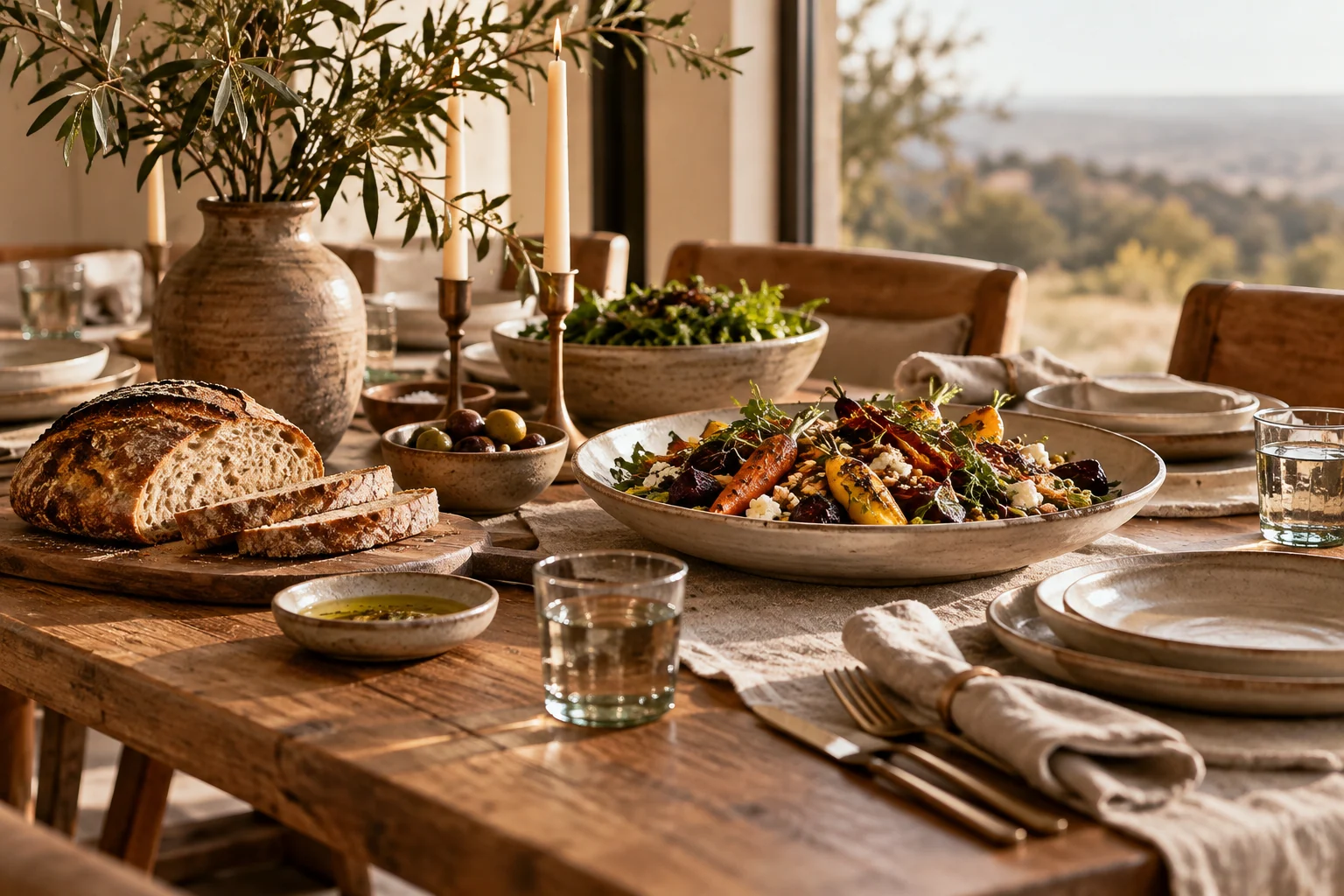
For example, if you decide on a Mediterranean-inspired spread, you can suggest that guests bring items that complement that specific profile. This prevents the arrival of a heavy, cream-based pasta dish when you have prepared light, citrus-forward proteins. The tradeoff here is a slight reduction in total variety in exchange for a much more harmonious dining experience.
Coordinating Contributions and Labor
The complexity of a dinner party often scales with the number of moving parts. In households where schedules shift frequently, the division of labor must be explicit. It is helpful to distinguish between what is being brought to the table and how it will be presented. Ask your guests if they would prefer to bring a finished dish or a specific ingredient that requires minimal assembly.
Imagine a scenario where three friends are coming over on a Tuesday evening. Instead of asking everyone to "bring something," you might ask one person to provide a crisp green salad, another to bring a specific bottle of wine, and a third to contribute a dessert. This clarity ensures that you are not left with three different appetizers and no main course. Furthermore, clarify whether guests should bring their contributions in serving vessels or if they should arrive in containers that you will then transfer to your own tableware.
Balancing Preparation and Presence
The most significant challenge is the transition from preparation to participation. To ensure you are not stuck at the counter while the wine is being poured, consider separating the heavy labor from the final assembly. Aim for a menu where the majority of the work is completed before the doorbell rings.
Ask yourself which elements of the meal can be finished at the table and which require your constant attention. If a dish requires a precise, last-minute sear, it may be better to choose a menu item that holds its temperature well or can be served at room temperature. By choosing components that allow for a hands-off final stage, you reclaim your seat at the table. The ultimate success of the evening is measured not by the complexity of the recipes, but by whether the host is present to enjoy the company they worked so hard to assemble.